


If I asked you when you were the fittest in your life, what would your answer be? I stumbled into this question last week, and my answer surprised me.1
What’s a Combat Field Test (CFT)?
At the end of March, the Secretary of the Army published an update to the army’s Physical Fitness Standards, Army Directive 2026-XC. Regular Downrange Data readers will recall a year ago in the spring of 2025 the army published EXORD 218-25 which reclassified two dozen jobs as ‘Combat MOSs’, challenging them with higher fitness standards.

Secretary Driscoll’s latest directive implements guidance from Secretary Hegseth pushed out at the end of fiscal year. The army made two small changes and one larger one. Three MOSs were added to the list: 12D (Army Divers), and 89D and 89E (Explosive Ordinance Disposal —EOD — NCOs and officers). The other small change was all evaluation reports will now include actual AFT scores, not just pass / fail like they used to. The larger change is the Combat Field Test (CFT). This new test now replaces one of the biannual AFTs. Passing one has no impact on passing the other — combat MOSs will need to pass both.
What’s in a CFT? Well, I didn’t know until last Friday. The policy went out Monday 30 March, I first read it on Instagram on Wednesday, and then on Thursday afternoon I found out the headquarters across the street was going to run one the following morning. And that’s how early Friday, after finishing my originally programmed deadlifts, I went outside to find out.
Candidly, the test is kind of fun. Or at least I had fun.
The CFT consists of seven sequential events completed as fast as possible (AFAP).
1 mile run
100m sprint
30 dead-stop push-ups
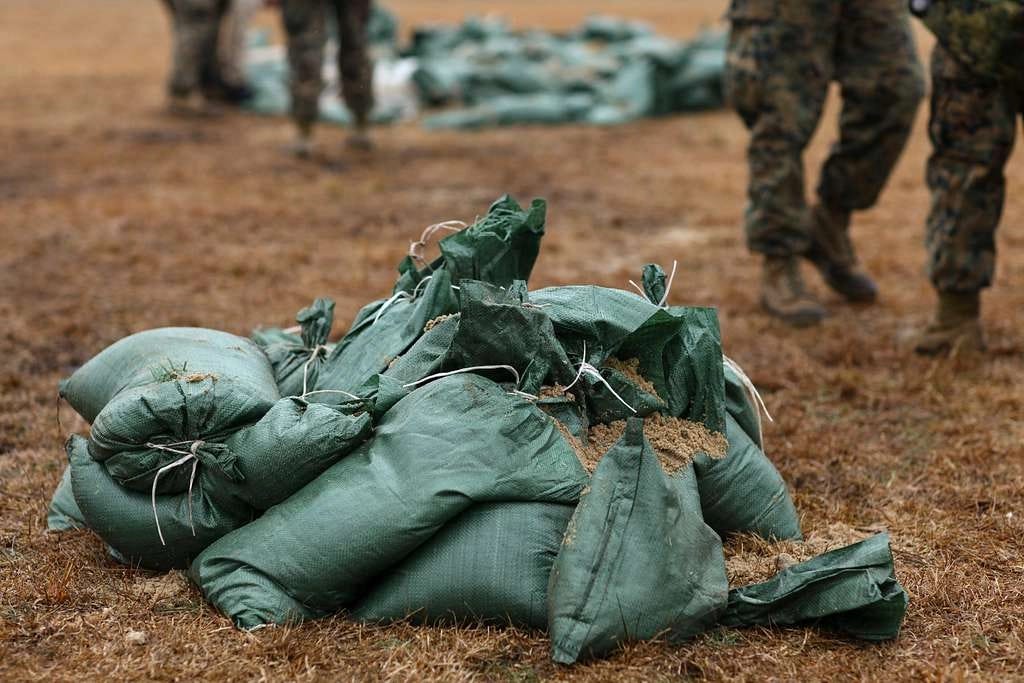
16x 40# sandbag lifts up to a 65” platform
50m water-can carry (2x 40#s)
25m high crawl then 25m 3-5 second rush
1 mile run
It’s a pass / fail test, so it’s not like the AFT where you must score a certain number of points in each event. The CFT is one set as fast as possible (AFAP), testing your ability to complete all the movements under a single time standard. The test is taken in boots and combat uniform — ‘boots and utes’ (shirt, top and bottom, but no hat).2
The runs are, well runs. You all already know that doesn’t spark joy in my heart.

But you know what does? CLEANS! Specifically sandbag clean-and-jerks. Sandbags are a great replacement for the now deceased standing power throw — aka overhead yeet.3 Now we can assess soldier’s clean power, but instead of a single max effort over the back blind throw — which, to be clear, again, NO ONE DOES — the test is a much more realistic clean and jerk motion. Forty pounds isn’t a ton of weight, but it’s about the heaviest thing you’d want to clean up to your head-height without instead getting a friend to help you. The day of my test we had eight sandbags and a rope at 65” off the ground. You ran up, cleaned all eight sandbags over the rope, then cleaned them back across.
The rest of the test should be fairly familiar. ‘Dead stop’ push-ups are just real hand release push-ups. Unlike the Ts we do in the AFT, you only lift your hands off the ground at the bottom of each rep, hyper extending your shoulders. They’re harder than the Ts, but not that big a deal. The water-can carry is the same weight and distance as the AFT, so it shouldn’t surprise anyone. The only movement that wasn’t a regular part of my workouts was the high-crawl, but it came back pretty quickly. Three-to-five second rushes are just running with burpees, which I do a lot.
The army hasn’t yet published the standards for the CFT, but I got a 19:30 on my first effort. We’ll see how that shakes out. For what it’s worth, I got a 19:44 on Fat Thor with Extra Guac, which is the full AFT AFAP at the 90-point standard — 90 points means you don’t have to get taped for body fat, hence ‘Fat Thor’. Given a lot of the two tests are the same and they share that AFAP format, it’s probably not too surprising they take about the same time.
How my fitness changed over my career
I shared my thoughts on the CFT over the weekend with some veteran buddies from Ar Ramadi, both in and out of service. One asked me:
So what’s the point of a CFT? Seriously. Like, I know PT sucked 20 years ago and the APFT was ‘meh’ but what problem are we actually solving here? I just wonder if anyone ever says “you know, whatever went wrong in Iraq or Afghanistan, it wasn’t because our soldiers were doing the APFT.” Similarly: “you know that Army that won desert storm? A huge number of them wouldn’t meet modern enlistment or commissioning requirements… I rather doubt whether I could have met these “modern” PT standards when I was younger (then again, had I been lifting weights back then and eating better, who knows?). But I know that I had no problem actually performing in, you know, combat. Really makes me wonder how many “combat capable” soldiers we’re losing.
First, I’m not sure these new standards are actually costing us any soldiers. I echoed my friends concerns when I wrote about the change last year, but thus far, I am unaware of a single soldier who’s been forced to switch MOSs.4
But my friend’s comment about ‘lifting weights… and eating better’ caught my attention. I found the CFT events — both individually and together — very manageable at 45. But I think 22-year-old Erik would have struggled more.
When I joined ROTC in 1999, I was coming off a decade of competitive swimming. While I wasn’t fast enough to swim Division 1, I walked into the army with the exact fitness leaders used to expect - I was a gazelle who could run for days. Maxing the two-mile run took little additional effort. At no point in my entire army career have I not maxed the sit-ups.5 I had to train up on push-ups some, but that came quick. According to almost every senior leader in the Army, I was fit.
However, walking around in my kit all day in Ramadi wore me out. I could ruck OK, but not well. This makes sense when you remember you’ve never seen a gazelle carry much. Light and lean, but not much mass.
This is, sadly, the same fitness I still see most units getting after today in the army. As I lapped around the track for the CFT, I got to watch the weird ballet of bullshit that most soldiers were doing. Their programming is still focused on long slow runs and bodyweight movements with no additional weight.
Back in 2005, when I got back from that first combat deployment, I started training for Special Forces Assessment and Selection (SFAS), getting into ruck shape. I still ran plenty, and did some other general calisthenics, but mostly I rucked. A lot. I was typically carrying heavier packs than I needed to train with, but wear and tear on my back and hips was a future Erik problem, and I wasn’t really expecting to live to see 30, so…
By the end of the Q course I was probably in the best ruck shape of my life, even better than the end of Ranger School. SFAS was the start of a year that saw ever heavier rucks carried over longer distances, culminating with Robin Sage where my ruck was so heavy that on infil I didn’t so much jump out of the plane as get dragged out of it. Over those eighteen months I developed the shoulders, legs, and core to carry a #135 ruck over a 10k woodland infil without really noticing.
But aside from selection events, I have almost never been called upon to actually carry loads that heavy that far. Our assessment and training were about finding our limits for the worst day, but the CFT is focused on what a normal day for a combat soldier could look like.
My training changed most dramatically in late 2007 when a fellow officer invited me to a CrossFit gym he had been going to. I never became a full convert, but the focus on lifting weights and functional movements became foundational to the training I still do today.6 I could feel the difference in my 2008 deployment, and even more so in 2010 in Afghanistan. My core strength carried my kit better and my heart was able to better handle the short bursts of high intensity I found myself in.
The Q course was the first time I encountered peers using steroids. There were a handful of guys who were on team ‘Pecs and pipes’ as we called them. These guys were trying to get yoked, and they did. But I watched them go down in the endurance events. Most of that steroids crowd went out the window after an Afghanistan trip, with the exception of those who only did commando fly-in-fly-out (FIFO) missions. Living in the valley at elevation and constantly going up and down, you quickly started cutting every ounce of weight you didn’t need. Once you shed all the nice-to-have but not necessary kit you’d brought, muscles for show were the next thing shed.
While I was smart enough not to indulge in steroids, I still had a lot to learn about fitness as a young captain. I mostly substituted raw power in lieu of good technique. When I came back to group as a Major after grad school in 2014, I embarked on the period where I set most of my lifting PRs. I could tell I wasn’t as ‘strong’ as I was when I was a CPT, but my technique was dramatically improved. I ran my first marathon in 2017, but my principal focus was on one-rep maxes (1RM) for deadlift, clean and jerk, and snatches. However, I was also getting hurt at least 2-3 times a year, usually torquing something while pursuing a 1RM.
The last major change to my fitness programming came in 2021, when my physical therapist got me to stop treating my mobility as an afterthought.

Since then, my injuries have dwindled to minor ones, maybe once a year. Nothing that keeps me out of the gym, just areas demanding more focused maintenance.
With this foundation of lifting and functional movements, I’ve found I’m ready for whatever gets thrown at me, like when the CFT was sprung on me with only half a day’s warning. I’m not #1 in anything, but I can do just about anything I get asked. Despite not running, I can still run the two-mile just fine, much to the chagrin of people who run a lot more. I even get PRs sporadically throughout my year, despite being 45.
This may seem an ironic definition of ‘fitness’, but it’s the same mistake people make when they misread Darwin’s theory of evolution. ‘Fittest’ doesn’t mean ‘strongest’. It means most capable of adapting to one’s environment, especially when it changes.
20-year-old me had energy but lacked proper training. I was highly specialized, which also means poor at adaptation. I was a lithe little runner who couldn’t carry much weight.
30-year-old me had a lot of strength and functional fitness, but I was still injury prone. A lot of my fitness had outsized risks, and when I was injured, I was very not ready to do anything, never mind adapt.
40-year-old me has the foundational strength but is also smart enough to avoid injuries. I now know how to train and program. I’m ready for the unknown and can ‘no-paddle-drop-in’ on the CFT and come away thinking ‘those sandbag clean and jerks are fun’.

‘When I was fittest’ has changed based on the demands. But I’d have to say, right now might be the fittest I’ve ever been. I’d probably be ‘stronger’ with 20-year-old knees and a 30-year-old core, but stronger isn’t fitter.
Anyways, go check out the CFT. It’s a pretty good workout, as long as you don’t find sandbag clean and jerks triggering.7
My father, uncle, and younger brother all served in the United States Coast Guard, whose motto, ‘Semper Paratus’ is where this post takes its name. Hat tip to their service, and to the rest of the Coasties out there.
I can definitely see clever soldiers opting for something a lot lighter than my heavy ass Rocky Sv2s.
Remember when I said I’d never use the word ‘yeet again’?

My current unit is not on the line, but I’ve asked peers and no one can tell me of a single instance they are aware of a combat MOS forced reclass either. Which means either,
a) everyone was already fit enough and ready to meet the standards or
b) they aren’t being implemented with the same rigor as other recent reforms like the war on beards.
The only combat MOS soldiers at my current post whom I know ensured they met the new combat standards are myself and my command sergeant major.
It turns out years of doing 1,500 flip turns a day gives you solid abdominal and hip-flexors muscles.
There are a subset of green berets for whom the words ‘sand babies’ will always bring back dark memories from selection.