


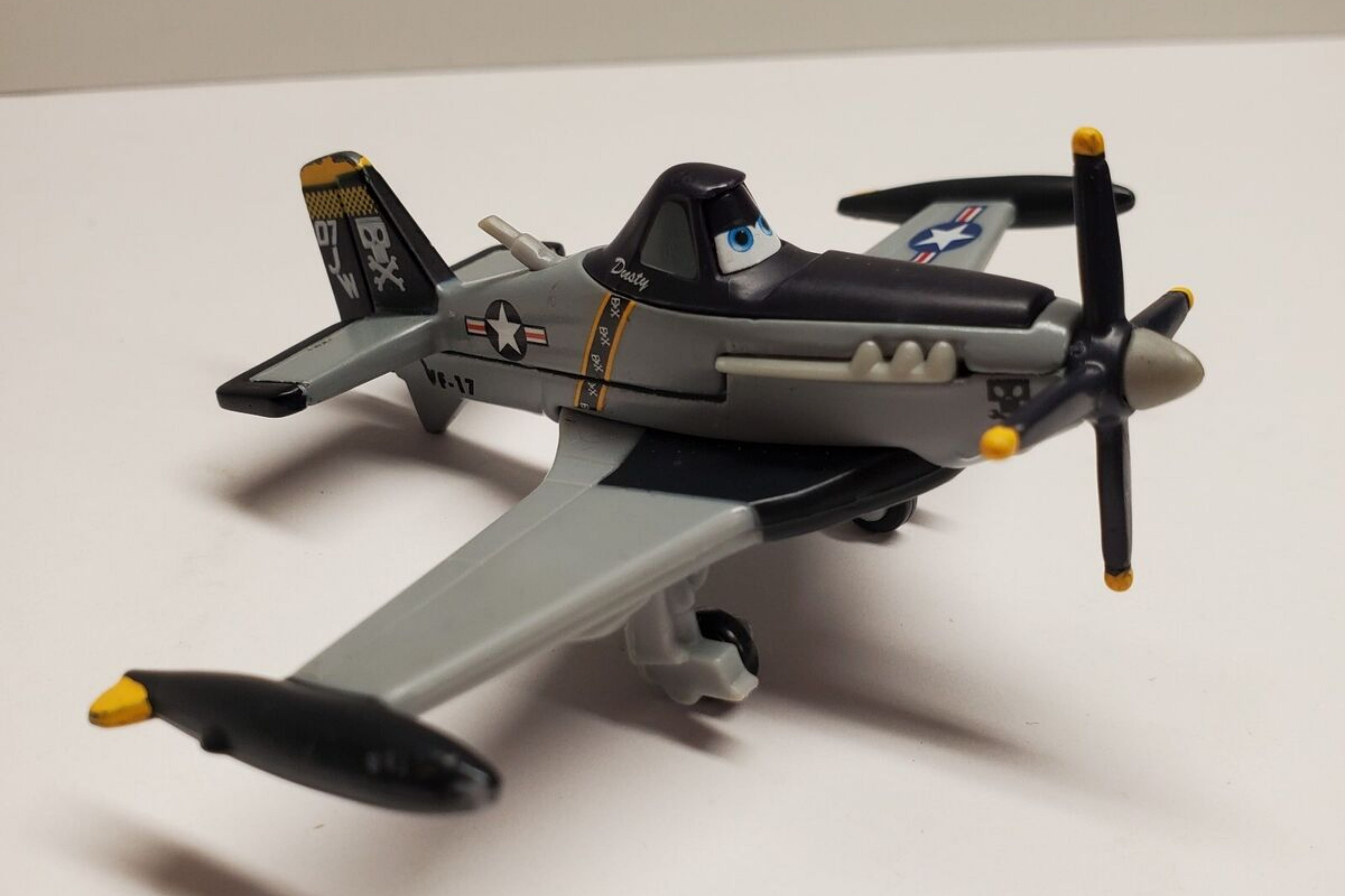
One significant reason why the military has such an unwavering reputation for ‘fighting the last war’ is because we are often buying equipment years behind the need.
Our military acquisition process is slow, typically painfully so. Spread across five deliberate steps, we have to first establish an Initial Capabilities Document (ICD) and explore the current Technology Maturation and Risk Reduction. If we can buy down the tech risks, we can move forward with a Capability Development Document (CDD) which allows us to give clear requirements for industry to bid on. If industries do bid, then we officially have ‘a program’; but, that still has to go through a Critical Design Review (CDR) and then a Low-Rate Initial Production, then a Full-Rate Production Decision Review (FRPDR). All of that with an eye toward the long-term Life-Cycle Sustainment and Disposal of the program.
While everyone understands the reasons for this program’s deliberate pace, it is killing us. Special Operations are supposed to be more agile than our parent services. We have a reputation for moving faster in acquisitions. And yet, despite having plenty of direct contact with our Ukrainian partners fighting right now against the Russian invasion, SOCOM’s acquisition process shows the same stodgy commitment to ‘last war’ platforms. The OA-1K ‘Skyraider 2’ perfectly illustrates this disfunction.
‘Armed Overwatch’
The OA-1K is a response to the 2017 Tongo Tongo ambush of an SFODA in Niger. I’m not going to go into detail on the attack, because after all the briefs I’ve gotten, I’m not certain what was and wasn’t classified anymore. The pertinent take away for the OA-1K is that in Tongo Tongo the detachment lacked ‘armed overwatch’ which could have both identified the forces maneuvering on the team and responded with fires to aid them.
Reacting to that attack, in early 2018 SOCOM set out to run the five-phase acquisition slog and just this month — seven years later — they released an episode of their SOFCAST podcast providing an update of the OA-1K. I was listening to it while doing snatches last week and quickly found myself shaking my head in frustration. SOCOM is shooting behind the duck with the ‘Skyraider 2’.
SOCOM has a $3 billion dollar contract with L3Harris to produce 75 of the OA-1Ks, which puts their price point at about $40 million dollars per plane. This of course excludes the additional costs to train, feed, and TDY two pilots, whom you also have to track dwell, SGLI, and a dozen other details for. We’re spending in excess of $40 million dollars each for a platform that works only in the competition space. It's dead in the crisis phase and high-end conflict.
In the podcast you’ll hear the airmen talk up the advantages the tiny plane offers over other airframes. It has a rear wheel so it can land on austere airfields and even has an ‘empty pod where the pilots can put their clothes and toothbrush’.1 AFSOC has plans to cross-train the pilots to do the ‘regular needed engine maintenance’, but for now the plane needs its own organic maintenance team. This team is smaller than the one for most AFSOC platforms, but it still needs airmen with dwell, SGLI, and training requirements.2 The guest also touted the additional armor on the plane, though they did not go into detail into the exact level of protection. Given the Houthi rebels managed to shoot down at least six MQ-9 Reaper drones in just the first half of this year, this is probably a very pertinent question.
The platform’s still not ready to roll-out just yet, though SOCOM was excited to share they are on the way as they reclass pilots. The guests on SOCOM’s podcast said they expect to see OA-K1’s '...fielded within two to three years.'
Meanwhile…
Two to three years ago this kid was in high school.
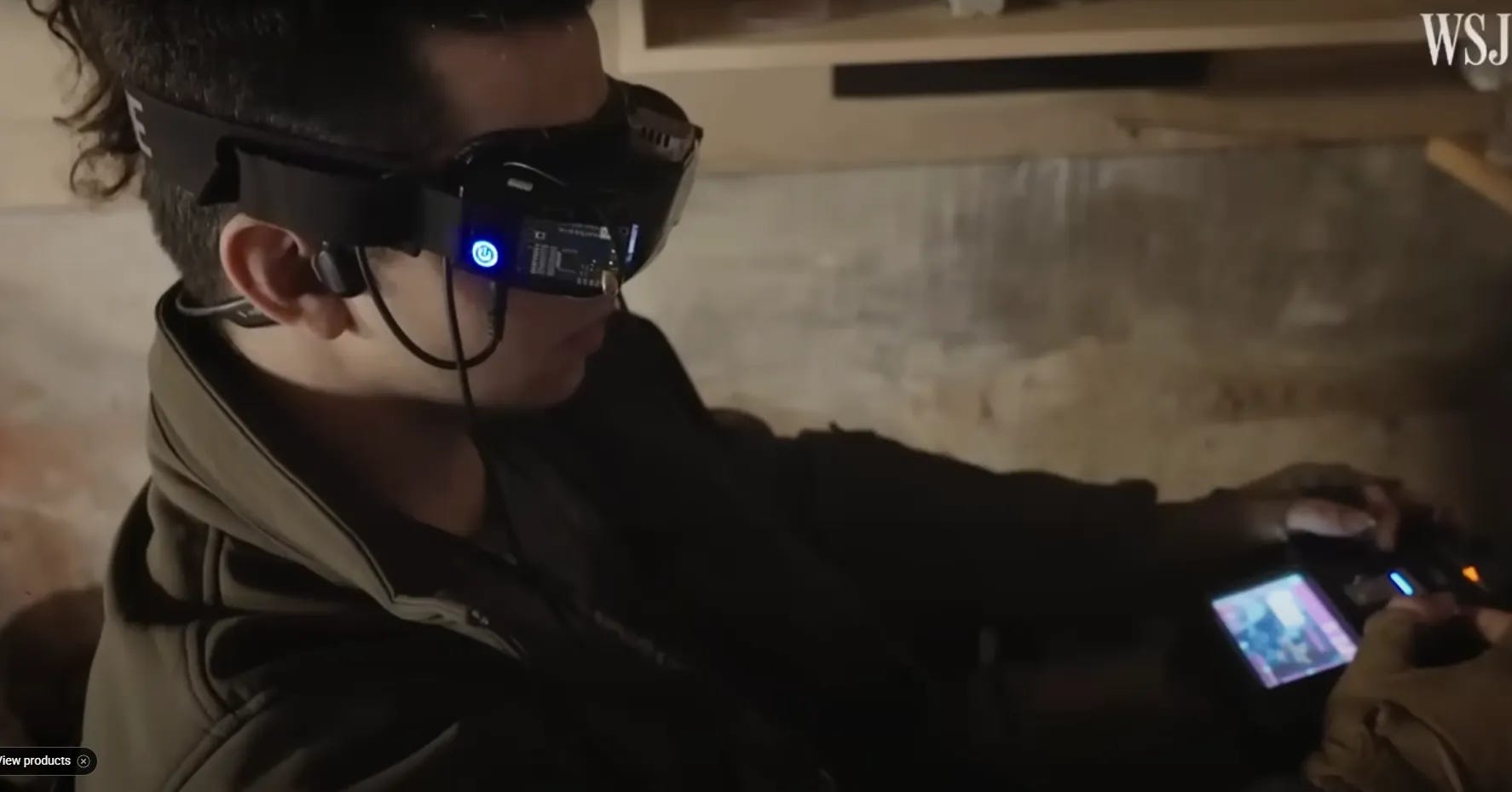
Today he has more Russian tank kills than everyone in the US Army. Combined. Across our entire national history.
Two weeks ago, Ukraine sent 117 small drones to simultaneously attack four Russian air bases. Those attacks damaged and destroyed over 40 Russian strategic air platforms, which some estimate could cost well over $1 billion to replace. The drones Ukraine employed run about $2,000 each.
‘Even including the operation’s other expenses, Kyiv still probably spent well under $1 million… Ukraine’s Drone Attack Exposes Achilles’ Heel of Military Superpowers - WSJ
At $2,000 dollars apiece, SOCOM could buy 20,000 of them per OA-K1. For the total $3 billion contract with L3Harris, SOCOM could equip all of its roughly 450 different detachments, platoons, and teams more with than 3,000 cheap drones each.
These cheap drones could easily be configured in a variety of options. They could be eyes in the sky ISR versions with longer loiter time. They could be remote controlled ones capable of carrying their own strike payload. Aware of the threat of GPS jamming, they could swap some of their explosive payload for 20 kilometers of cheap expendable fiber optic wire. In reality, it’d best be a mix of all three as well as three other versions: ones that intercept signals or spoof cell towers, ones with their own terminal guidance systems that can conduct their own strikes once armed, and ones that intercept other drones. They could also quickly and easily be updated to new versions no one’s bothered to dream up and build yet.
For $2,000 a pop, every team in SOCOM could have thousands of these. They’d be at a size and weight to enable teams to carry dozens at their fingertips, no ‘austere airfield’ necessary. The limit wouldn’t be cost, but cargo space. No long flight school, no engine maintenance. No additional TDY cost, no new SGLI. No crew rest. They wouldn’t be armored like the OA-K1, but when they’re disposably cheap — when you can afford for every team to have 3,000 of them — who cares? Every team would be in possession of their own ISR and strike platforms. Ones they own, they control. Ones they can launch from their own trucks. Their own ‘armed overwatch’.
Undermining the Monopoly of Force
Plenty of ink has been spilled about the end of the ‘Global War on Terrorism’, and the shift to ‘Great Power Competition’. SOCOM, like the rest of the joint force, needs to be paying attention to the lessons they could learn from Ukraine’s daily innovation. The Ukrainian battle lab has churned out more innovative platforms in three years than SOFWERX has in a decade of existence.
However there’s another reason SOCOM needs to be paying close attention to cheap drones: the Army and other services may be all too happy to spike the football on terrorism, claim victory and move on, but terrorism is a tactic, not an entity you can beat.
States are built on Weber’s ‘monopoly of violence’. Terrorism often seeks to undermine that monopoly, as do other guerilla, insurgent, and criminal groups. As the recent strikes across Russia show, the cost of violence and destruction is going down. Cheap drones aren’t just a tool for states and high-end conflict.3 Aum Shinrikyo operated on a budget of about $30 million dollars (almost $50 million today). It’s hard to keep a monoploy when the barriers to entry are so low.
Cheap drones dramatically reduce the cost of violence. Clever states are already showing they can adapt their operations to exploit opportunities. This month alone Ukraine demonstrated the potential for these strikes in their Operation Spiderweb. Israel did the same in their Operation Rising Lion, where SOF teams inside Iran used cheap strike drones to suppress the Iranian air defenses and soften up other targets. SOCOM needs to be on the bleeding edge of understanding how to fight both with and against these threats. Buying crop dusters isn’t getting us there.
We need to figure out what we can salvage from the current acquisition process, but we need to fundamentally reform the way we’re making our kit. We need to adopt a software approach that can move at the speed of cheap tech for all but the most high end and unreplaceable platforms. And we need to do it now, not in two to three years. No one is waiting for us to catch up.
The airmen do decry the lack of space for their golf clubs.
Air Force Special Operations Command. The Air Services component to SOCOM.
I was recently told by a peer in PME that there are instructors in Army schools claiming that the fighting in Ukraine is ‘not LSCO (large scale combat operations)’. It boggles my mind to hear about such willful blindness.
-The time duration to get something substantive to percolate out of the acquisition process is terrible. It's as if (faster digital systems + simpler communication between vendor and Government + mature technologies = 4x the dev time). For similar roles in history as the new Skyraider, we have the A-37, the O-2, and the Bronco. The O-2 was about 2 years from Need to Production/Fielding (in combat). The A-37 went from concept to 25 aircraft operationally testing in Vietnam inside of 5 years. The Bronco took about 2-3 years. Per unit adjusted cost was all a lot lower. This was in the '60s. Maybe "Industrial Age Management" isn't quite the problem we think it is and 'good management' never goes out of style. Note that these are birds that got good marks for their effectiveness. Some are still flying in both .mil and .civ roles. Notably, the Bronco was resurrected for work overseas as a stop gap in the 2010's.
-As far as the backpack airforce, Erik, you are spot on point. I think a guiding priciple going forward has to be a clear separation between these near earth, small unit airframes, and the bigger, faster, more capable manned and unmanned airframes. The grey zone in between the High / Low is a waste of resources. I say this as cost / capability either quickly escalates, or the thing just does the same thing the smaller / cheaper assets do, especially at scale.
The it’s not LSCO argument blows me away every time. I think they confuse large scale with great power for some reason.